Nicholas Hogan
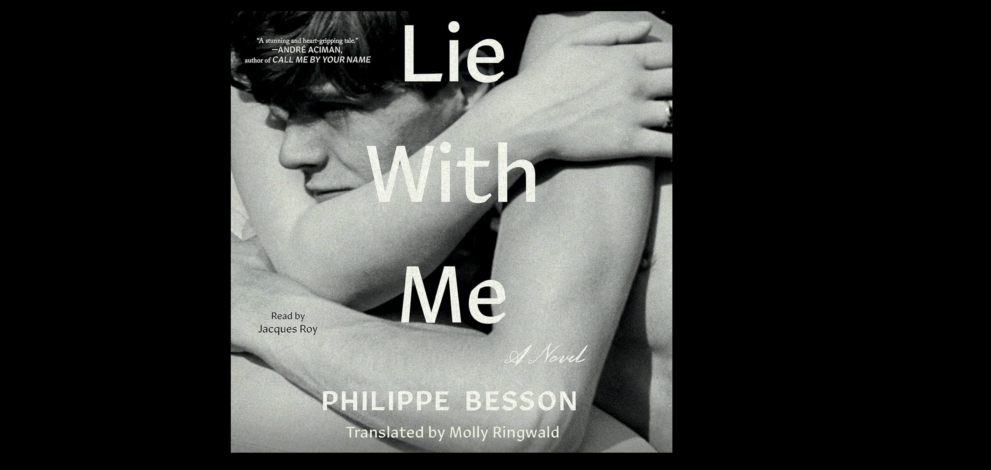
Lie With Me is a queer tragic romance novel written by Philippe Besson in 2017. In
2019, it was translated from French into English by Molly Ringwald. It is a very well received
story among most readers, often being praised for its evocative emotions and central
relationship. Personally, I have always had trouble getting wrapped up by the emotions of the
story. It fails on an emotional level because it fails to ground readers in that central relationship.
The story follows Philippe (separate from the author, but not really), an author
reminiscing about his first love, Thomas, a boy he had a secret relationship with in high school.
The biggest problem with the story is that it fails to make readers care about the characters and their relationship. The main love interest, Thomas, is completely unlikeable. He treats Philippe like a piece of meat throughout the story. Despite Phillipes uncomfortability, he has relationships with women while he and Philippe are together. Additionally Thomas refuses to be seen near Philippe. Towards the beginning, readers are given the impression that Thomas will change for the better, but he never meaningfully does. Then at the end of the novel, there are long musings on how Thomas was a great person. Thomas and Philippe’s relationship is continually referred to as truly special, but the praise doesn’t feel earned.
Readers may find that it is difficult to feel bad for Philippe due to him being a
pushover. The things that Thomas does and says constantly bother Philippe, but he never says anything about it and continues to let Thomas use him.
A big problem with Phillipe’s character is that he feels like a very obvious author-stand-in, in really obnoxious ways. For one, the main character is named after the author, and becomes an author in the story. The story also starts with “In Memory of Thomas Andreiu,” showing that the story is at least a little autobiographical. There are long stretches throughout the story stating how intelligent Phillipe is and how he is much too big for his small town, which add nothing but a sense that Phillipe is a bit full of himself. But with the understanding that Phillipe is probably just Besson, they feel incredibly vain. There are many unfocused segments in the story where “Phillipe” will talk endlessly on a subject that he is really interested in / knowledgeable about that does not aid the story in any way. One example of this are the four pages near the middle of the novel of “Phillipe” discussing his love for black and white films, which adds close to nothing to the story, and you get basically nothing out of it if you have not seen the movies. These segments often come off as show-offy and only really serve to show how intelligent Phillipe the author is on these topics.
One main thing that makes the story incredibly hard to get wrapped up in is the structure of the story. The novel is told almost exclusively as a summary of events, without much direct dialogue or specific details. This makes it incredibly hard to feel connected to the characters, or the events of the story. One line that shows this is when they first have sex:
         And then, he asks me to take him. He says the words, without shame, without ordering me
         either. I obey him, though I am afraid. (31)
Without a specific quote of what he says, it is hard to understand Thomas’ motivation; all that we have is Philippe's description of his tone, which is much less interesting. It does not feel especially sensual or uncomfortable. Even though this moment is the summation of Philippe's yearning in the beginning, it doesn’t evoke anything. Both of these things could have worked if the story properly used its framing device of looking back on this relationship. Philippe never does any true reflection on the events. We do not ever see him reflecting on his decisions from an adult perspective, or looking at Thomas as anything less than a god. Instead, when adult Phillippe cuts in, it often feels random and unnecessary such as in these lines:
         I remember the name. Thomas Andrieu.

         I find it a handsome name, a beautiful identity. I don’t know yet that one day I will write books,
         that I will invent characters and I will name those characters. (14)
The details that he will one day name characters is unneeded and distracts from the scene. One
big problem that affects the whole story is that they never directly show the homophobia
around the main characters; you are just expected to believe that it is there. Just one scene
showing homophobia in action would make the fact the secret relationship have weight and
help us understand Thomas.

There are certainly moments that I like; for one the desperate but seemingly hopeless
attraction that Philipe describes in the beginning is really well realized and relatable. A line that
describes this really well is:
         I feel this desire swarming in my belly and running up my spine. But I have to
         constantly contain and compress it so that it doesn’t betray me in front of others. (17)
Though I do not think the end relationship is especially well handled; the part of me that has
desperately yearned after people whom I know will not ever reciprocate wants them to work out.
This is the only section where I really get the deep emotions that others describe the story as
having.
Despite some of my issues with the structure, at least on a prose level, Ringwald and
Besson are very competent writers with clear and imaginative descriptions. Overall, though the
story has its merits, it fails to be a character driven romance because it fails to invest readers in
the characters or their romance.
If the concept is appealing to you, I would instead recommend the novel Swimming in
the Dark by Thomasz Jedrowski. Similar to Lie With Me, it is a queer tragic romance centered
on the all-consuming first love of two boys in a disapproving retro-European setting. It is a
much more emotionally rich story because it really makes one feel the romance at the center and
makes the reader root for them despite knowing they are doomed from the start. While the
characters are similarly flawed, they are deeply identifiable and their flaws are used intelligently
to bring compelling drama. Readers also feel the potential danger of the setting, making the
characters’ decisions hold weight.